
A woman named Stella purchased her first Jellycat cuddly companion during a time of job loss in the pandemic. Prompted by an acquaintance's enthusiasm for these UK-created creatures, her interest was truly ignited upon seeing a unique gingerbread house design featured on a popular social networking app.
Although The Christmas holiday isn't traditionally observed across China, serving more as a retail occasion rather than a cultural tradition, the concept of gingerbread houses resonated to Stella. "The festival doesn't hold much for me... However, I have always loved the sight of those sweet houses," she explains. This led her to request an old friend in Guangzhou to purchase the item on her behalf.
That acquisition was made in 2021, right as Jellycat was poised to achieve enormous popularity across China and beyond. "People were anxious, and nobody knew what would happen," recalls Stella, who picked up a habit of petting and hugging her soft toys for comfort throughout a difficult period. Residing in Beijing, a city with some of the most stringent restrictions globally, she passed extended periods indoors.
Now aged 32 with a new job as a sales manager in the tourism industry, Stella continues to grow her collection. Her collection has grown to around 120 items, representing a cost of about 36,000 yuan. "At my age, you have many things that you cannot share with others... and the troubles we encounter are a lot more complex than in the past," she says reflectively. "These soft toys help me regulate my emotions."
Initially created for children, these soft creatures have transformed into a global phenomenon, particularly in China where a increasingly disenchanted younger generation has been seeking solace in them for emotional support.
The Rise of Adult Toy Enthusiasts
Stella's Gingerbread house toy belongs to the "Amuseables" series, a range of characters featuring small expressions based on commonplace items, from toilet rolls to hard-boiled eggs. These toys are considered the "standout products" which "resonate with a wide younger adult audience" globally, according to market observers.
The surge in appeal "could have something to do with a desire to feel a sense of connection," propose experts. While it's hard to say for sure whether the introduction of the now-iconic series in 2018 was a deliberate move to engage the adult consumer, toy manufacturers increasingly need to find new markets due to falling fertility rates across numerous parts of the world.
The brand made its foray into China back in 2015. By laying significant "groundwork", the toy maker was well-positioned to tap into "the tone of the pandemic"—a time when individuals looked for solace amid heightened anxiety—and built on its early momentum in the country, as explained by business consultants.
Jellycat's popularity was also propelled by creative temporary events. These retail activations often featured a menu of exclusive "culinary" products. Numerous enthusiasts record themselves interacting and share the videos on social platforms.
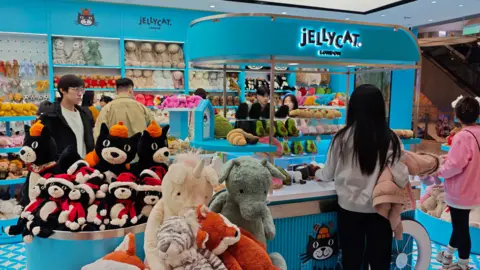
Localisation proved to be an essential approach. As an example, customers were able to buy plush interpretations of traditional British fare like fish and chips at a pop-up overseas. Meanwhile, items like teacup and teapot plushies were sold at special outlets in Beijing and Shanghai last year.
Last year, the British company's revenue reportedly increased significantly to a substantial sum. In that timeframe, it sold an estimated $117 million in value of toys to Chinese consumers on major online marketplaces, per market intelligence estimates.
This expansion mirrors a broader boom in China's collectible toy sector among young adults seeking emotional support and community. Total revenue of collectable toys in China are projected to top 110 billion yuan this year, as per a recent industry report.
The remarkable popularity of other toys such as Labubu, elf-inspired dolls by domestic company Pop Mart, underscores the market's increasing demand towards collectable toys. This "adult-child" trend is not unique to China; young adults worldwide are starting to re-evaluate "traditional understandings of adulthood," note academics.

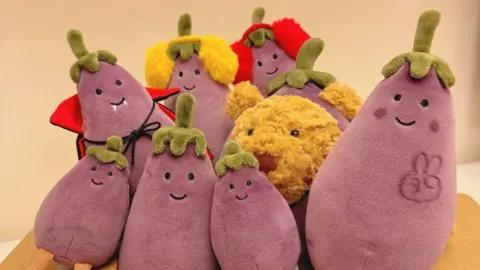
Amuseables, especially the eggplant plushie—nicknamed "the big boss" in China—have also spawned numerous online jokes, where users expressing frustrations regarding the pressures of adulthood. The "aubergine boss" hashtag serves as a platform where fans sketch different expressions on their toy, showing it in different states enjoying a drink to forcing a smile.
As an illustration, one Hong Kong-based, Wendy Hui, modified her aubergine toy by drawing dark circles around its eyes and placing a pair of glasses on the toy. She then posted a picture on a social platform captioning it: "The mental state of workers at the start of the week." "I kept working at home even on time off," she explains. "I merely intended to convey the level of exhaustion I was."
Thus, Jellycat has become an unexpected, light-hearted outlet for young Chinese to voice their frustrations about economic challenges, where dedicated effort doesn't always ensure comparable rewards. Despite strict online censorship, the internet have become a crucial, perhaps the primary, space for these types of conversations.
The brand's frequent releases of exclusive designs and the discontinuation of older designs—an approach sometimes referred to as "scarcity marketing" in China—has also fueled {

