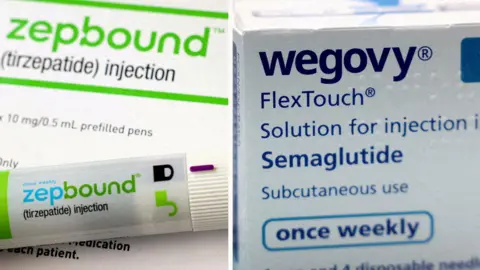
American leader President Trump has announced deals intended to reduce the price of popular obesity drugs, as drug costs become a focus in his leadership's messaging about accessibility.
Key Deals with Drug Firms
Speaking alongside drug executives at the executive mansion, the President announced deals with Eli Lilly and the drug manufacturer. Patients are expected to pay from $245 to $350 monthly for obesity drugs like Novo Nordisk's drug and Eli Lilly's medication.
Many GLP-1 treatments, employed against diabetes and excess weight, cost exceeding $1,000 monthly in the absence of coverage or savings.
Expanded Availability to Public Healthcare Programs
The arrangements will increase Eli Lilly's and the manufacturer's access to the federal health program and the state-federal health plan, the public health programs for elderly and low-income citizens.
The pharmaceutical firm also announced in a release it would escape import duties for 36 months as a component of the deal with the Trump administration.
Cost Breakdown
Roughly ten percent of Medicare beneficiaries will be able for increased availability to GLP-1 treatments, and will be charged just $50, as stated by high-ranking government leaders.
Those participating in the state-federal health plan will see a phased implementation depending on when states sign up to participate.
TrumpRx Platform Roll-out
The obesity treatments will be sold at reduced rates on the patient-facing federal platform, a publicly managed portal planned to go live by next month.
Via TrumpRx, Novo Nordisk's drug and Eli Lilly's medication will start at $350 each month on average, and drop to $250 within a couple of years. The federal health program prices of Ozempic, Wegovy, Mounjaro, and Zepbound will be $245.
Further Drug Alternatives
Along with Novo Nordisk's weight-loss injection, Eli Lilly's weight-loss pill, orforglipron, will be offered for $149 for the minimum dosage, the manufacturer announced in a release. The firm's Zepbound will be priced at $299 for a starting amount.
These rates are subject to FDA clearance of the pills.
Insurance Issues
Glucagon-like peptide-1 drugs are often not covered by health plans. US legislation bans the federal program from reimbursing the treatments when prescribed for weight loss, though they usually are covered when prescribed for diabetes and heart conditions. Merely thirteen state governments offer insurance under the state-federal plan for slimming reasons.
Medical Secretary's Statement
Health Secretary the administration official, making remarks at the White House, said the arrangements were products of months of talks with the pharmaceutical company and the drug manufacturer. He called overweight "the number one factor of long-term illness" in the United States.
"This will be a critical help to patients," the Health Secretary stated.
"It's not a panacea, it's not a easy answer," he continued, highlighting the value of dietary changes and fitness routines.
History of Pharmaceutical Price Efforts
Starting in summer, the President has been urging medication manufacturers to lower drug prices. He sent correspondence to seventeen pharmaceutical firms in the summer, allowing them 60 days to respond to his requests for reduced rates.
The pharmaceutical giant was the first significant drug maker to reach a deal with the administration, slashing rates for certain treatments by nearly eighty-five percent on the TrumpRx. The company additionally consented to reduce treatment prices for Medicaid.
AstraZeneca and EMD Serono have additionally finalized deals with the government in recent weeks.


